

THE INVISIBLE ARCHITECTURE
WHAT IS NEURO- ARCHITECTURE?
Designing spaces with a deeper understanding of how people experience them.
LIGHT · SOUND · LAYOUT · SCALE
MATERIAL · NATURE
Architecture is not just something we look at.
Neuro-architecture is design informed by how people experience space.
Light, acoustics, layout, privacy, materiality, scale, movement, and access to nature can all influence how comfortable, focused, calm, stimulated, or oriented an environment feels.
Neuro-architecture brings these human responses into the design process.
The goal is to consider not only how a space looks, but how it works and feels for the people using it.


WHAT SHAPES OUR EXPERIENCE OF A SPACE?
LIGHT
Daylight, glare, contrast and artificial lighting influence visual comfort and how an environment changes throughout the day.
WE ARE
BIOLOGICAL BEINGS
IN ARTIFICIAL BOXES.
Human beings developed in environments filled with changing light, natural materials, movement, distance and sensory variation.
Modern life is different.
We spend much of our time inside controlled environments, surrounded by artificial lighting, hard surfaces, screens, mechanical systems and enclosed rooms.
Neuro-architecture asks a practical question:
How can the built environment better support the people spending their lives inside it?This is not simply about adding plants to a room. It means considering our relationship with light, sound, material, movement, privacy, scale and nature from the beginning of the design process.
THE THIRD SKIN
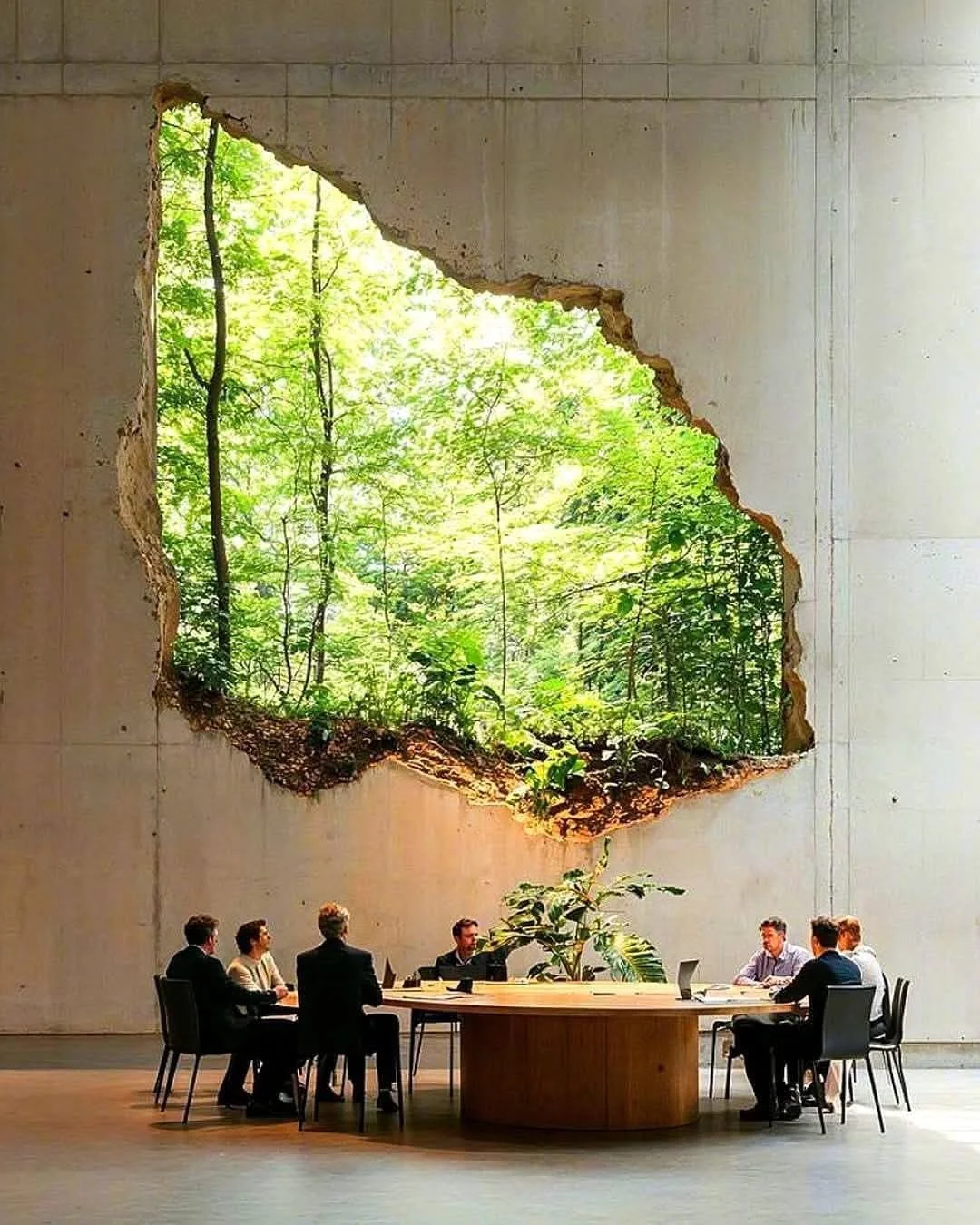
A space can look
beautiful.
And still feel wrong.
A dramatic office can still make concentration difficult.
A luxury clinic can still make a patient feel exposed.
A beautiful restaurant can still be exhausting to sit in.
A polished hotel can still be confusing to navigate.
Good design has to work beyond the image.


SAFETY
Does the environment feel understandable, comfortable and appropriately private?
Visibility, acoustics, privacy, circulation, orientation and spatial enclosure can influence whether an environment feels intuitive, exposed, confusing or comfortable.
In a workplace, that might mean creating places for both collaboration and focused work. In healthcare, it might mean reducing uncertainty through clearer wayfinding and better privacy.
We experience architecture through more than our eyes.
Lighting, sound, texture, temperature, materiality, pattern and visual complexity create the sensory character of a room.
Rather than treating these qualities as decoration, neuro-architecture considers how much sensory information an environment provides and how that experience relates to the people using it.
The needs of a person at 9 AM are not always the same as their needs at 6 PM.
Daylight, artificial lighting, movement and transitions between active and quiet spaces can help an interior respond more intelligently to different activities throughout the day.
The goal is not to create a building that controls human biology. It is to consider daily rhythms when shaping the environment around us.
Six elements.
One human experience.
Select an element to see how it becomes part of the experience of an interior.


Light shapes visual comfort.
Daylight, glare, contrast, shadow and artificial lighting influence visibility, atmosphere and how an interior changes across the day.
05 / LYLKO STUDIO
OUR APPROACHCONCRETE EMPATHY.
Before asking what a space should look like, we ask what the people inside it need.
Where do they need to focus?
Where do they need privacy?
Where could noise become a problem?
How will they understand where to go?
Where should the environment feel energetic?
Where should it become quieter?
Those human needs become decisions about layout, lighting, acoustics, materials, circulation, views, scale and spatial transitions.
Human needs become architectural decisions.The principle changes with the place.
Different environments create different human needs. Neuro-architecture gives us another way to evaluate those needs during design.
WORKPLACE
Focus, collaboration, privacy, acoustics and movement.
↗ 02HEALTHCARE
Waiting, privacy, orientation, comfort and sensory load.
↗ 03HOSPITALITY
Atmosphere, acoustics, intimacy, movement and experience.
↗ 04RETAIL
Attention, orientation, discovery, pacing and brand experience.
↗ 05WELLNESS
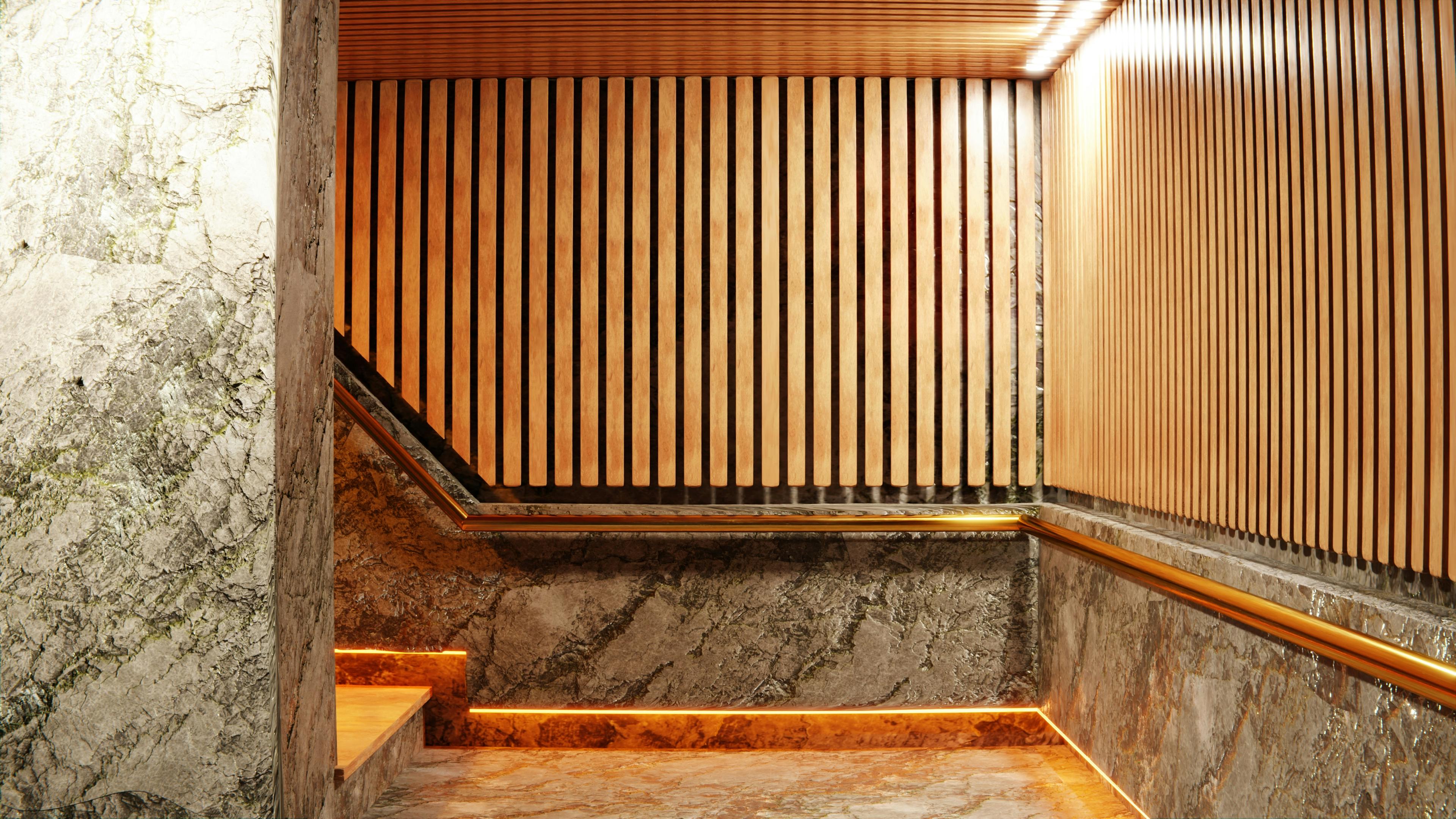
Restoration, privacy, materiality, nature and sensory transition.
↗
Design intuition,
informed by
research.
Neuro-architecture sits at the intersection of architecture and research into human experience.
Environmental psychology, neuroscience, cognitive science and related fields can help designers ask better questions about how environments are perceived and experienced.
Research can inform design. It does not provide a universal formula for how every person will respond to every room.
Research examining aesthetic judgments and architectural form.
↗ 02Research examining perceived ceiling height and information processing.
↗ 03A historical study examining window views and postoperative recovery.
↗08 / QUESTIONS
Neuro-architecture,
without the mystery.
What is neuro-architecture? +
Neuro-architecture is an approach to design that considers relationships between the built environment and human perception, cognition, emotion, behaviour and wellbeing. It can inform decisions involving lighting, acoustics, spatial layout, scale, materiality, privacy, movement and nature.
How is neuro-architecture different from interior design? +
Neuro-architecture is not a replacement for interior architecture or interior design. It is an additional lens that can help designers evaluate how decisions about space may influence human experience.
Is neuro-architecture the same as biophilic design? +
No. Biophilic design focuses on relationships between people and nature within the built environment. Neuro-architecture can include biophilic strategies, while also considering acoustics, lighting, privacy, scale, layout, materiality and other environmental conditions.
Does neuro-architecture work the same way for everyone? +
No. People experience environments differently. Age, culture, neurodiversity, personal history, activity and individual preference can all influence how a space is perceived. Neuro-architecture should inform design decisions rather than be treated as a universal formula.
Where can neuro-architecture be applied? +
Its principles can be considered in workplaces, healthcare environments, hospitality, restaurants, retail, wellness spaces, commercial interiors and residential environments.
09 / AN ETHICAL RESPONSIBILITY
Architecture is difficult to escape.
We can turn off a screen. Leave a song. Close a book.
But the spaces where we work, recover, eat, meet, wait and live can surround us for hours every day.
That gives interior architecture a responsibility beyond appearance.
“Does this space look good?”
BUT ALSO “What is it like to be a person inside it?”Explore how Lylko Studio applies neuro-architectural and biophilic thinking to interior architecture.
& BIOPHILIC DESIGN →