
Commercial Interior Design
Designing Commercial Spaces Around People, Performance, And Experience
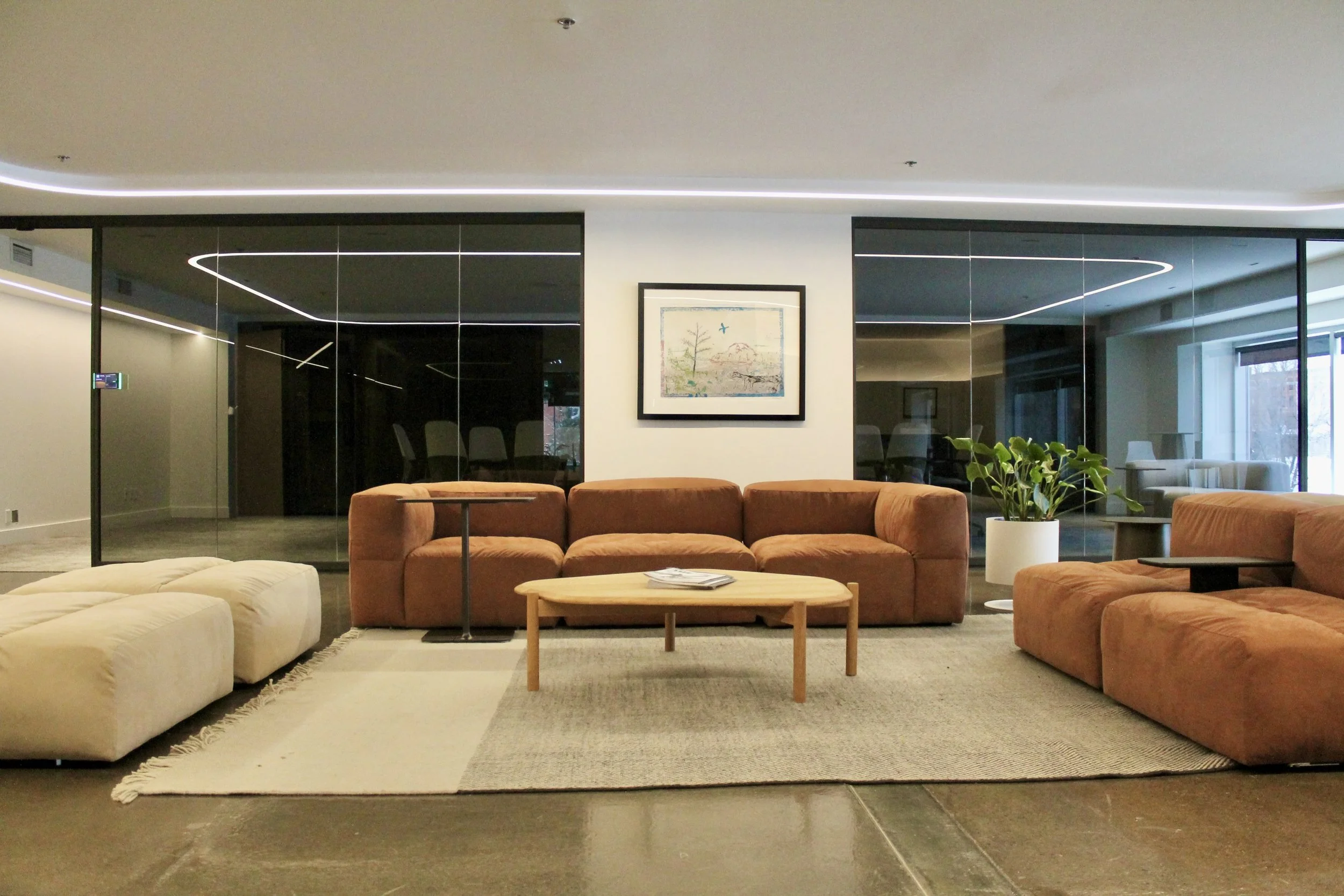
Lylko Studio creates commercial interiors in Montreal that support how people feel, move, work, gather, and experience a business.
01
What Is Commercial Interior Design?
Commercial interior design is the planning and design of functional spaces used by employees, clients, and the public.
Unlike residential projects, commercial spaces must balance aesthetics, safety, brand identity, and daily operations to support long-term business goals.
At Lylko Studio, commercial interior design is approached through neuro-architecture and human-centered thinking. Every design decision is carefully made to improve how people feel and experience the space.
The environment is often your most powerful business asset.
Optimizes space movement, workflow, and business efficiency.
Enhances human focus, mood, and visual comfort.
Shapes the interior atmosphere, durability, and sensory experience.
Reduces noise to improve concentration, privacy, and comfort.
Connects your brand identity to a memorable customer experience.
02
Commercial Interior Design: The Science of Strategic Spaces
The human brain responds to physical surroundings instantly. Before a client or employee ever interacts with your team, they are already reacting to the space around them.
A poorly designed commercial space creates invisible friction, causing subconscious stress, distraction, or fatigue. At Lylko Studio, we use neuro-architecture to eliminate this friction. We design high-end commercial interiors that align with human biology, ensuring people instinctively feel comfortable, focused, and connected to your business.
- Immediate Trust: High-end first impressions that instantly elevate your brand authority.
- Customer Experience: Intuitive environments designed for optimal client and patient comfort.
- Employee Wellbeing: Workspaces engineered to reduce mental fatigue and improve daily focus.
- Seamless Navigation: Clear spatial flow that removes confusion and optimizes movement.
- Lasting Memorability: Distinct physical experiences that keep people coming back.
Spaces We Design
Commercial Environments Built Around The People Who Use Them
Workplaces designed to support focus, collaboration, culture, and workplace wellness.
Medical, dental, wellness, and aesthetic spaces designed around comfort, privacy, trust, and care.
Restaurants, hotels, bars, and hospitality interiors designed to shape atmosphere, flow, and guest experience.
Retail environments designed to strengthen brand perception, customer flow, and product discovery.
Spaces designed to support calm, restoration, movement, and long-term client engagement.
Neuro-Architecture
Beautiful Spaces Attract Attention. Intelligent Spaces Influence Behaviour.
Neuro-architecture explores how the built environment affects the brain, body, and human behaviour. Light, sound, layout, materiality, proportion, and visual complexity all shape how people feel inside a space.
In commercial design, this matters because people do not only judge a business by what they see. They judge it by how the environment makes them feel.
Lylko Studio uses neuro-architectural thinking to create commercial interiors that feel intuitive, supportive, and memorable.
03
Commercial Interior Design In Montreal
Montreal has a unique commercial landscape. From heritage buildings in Old Montreal to modern developments in Griffintown, Downtown, Westmount, and Mile End, every project brings its own constraints and opportunities.
Many Montreal commercial spaces require thoughtful planning around older structures, narrow footprints, mixed-use buildings, changing work habits, and customer expectations.
A well-designed commercial interior helps a business stand out while still respecting the architectural character of its surroundings.
Our Process
From Concept To Execution
Discovery & Programming
We analyze your physical space, daily business operations, and user habits to establish a clear, data-driven project brief.
Spatial Strategy
We define the initial space planning, zoning, and traffic flow using neuro-architecture principles to optimize human comfort and workflow.
Design Development
We create detailed 3D concepts, select final material palettes, and produce the complete technical drawing package required for construction.
Project Execution
We coordinate with contractors, handle technical documentation compliance, and supervise site implementation to ensure design accuracy.
Common Mistakes
What To Avoid In Commercial Design
A beautiful commercial space can still fail if it does not account for human psychology and operational realities. Avoiding these common oversights ensures an environment drives both well-being and business growth.
Prioritizing fleeting trends over long-term human behavior and functional user experience.
Focusing only on visuals while ignoring critical sensory factors like acoustics, lighting, and spatial flow.
Delaying expert spatial planning, which often results in operational friction and costly structural fixes later.
Designing for a single user type, forgetting that clients, patients, and employees experience the exact same environment differently.
Commercial Design Planning Checklist
A strategic checklist to align your physical environment with human psychology and business objectives.
- Emotional Impact: What should clients and teams feel the exact moment they enter the space?
- Spatial Flow: How should people intuitively move through the layout to optimize daily operations?
- Business Alignment: What specific commercial goals must the physical environment support?
- Brand Identity: Does the interior design clearly reflect the company’s values and positioning?
- Human Comfort: Does the environment actively support daily focus, well-being, and physical comfort?
- Future Growth: Can the spatial layout easily adapt as the business scales and evolves?
FAQ
Commercial Interior Design Questions
What does a commercial interior designer do?
A commercial interior designer plans, layouts, and designs business environments to optimize both human well-being and daily operational efficiency.
What types of spaces benefit from commercial interior design?
Any professional environment where human experience impacts business success—including corporate offices, medical clinics, retail boutiques, restaurants, and wellness centers.
What is typically included in a commercial design service?
The scope generally covers spatial planning, layout optimization, lighting design, material and furniture sourcing, and the creation of technical drawing packages for construction.
What is neuro-architecture?
Neuro-architecture is the study of how the physical environment impacts the human brain and behavior. In commercial design, it is used to reduce stress, improve mental focus, and enhance space navigation.
When is the best time to hire a commercial interior designer?
Ideally, before signing a commercial lease. Early involvement allows an expert to evaluate the space's potential, prevent costly layout mistakes, and optimize the functional flow from the start.
Does commercial interior design apply to renovations?
Yes. Commercial design services apply to brand-new spaces, complete interior structural renovations, or the optimization of existing layouts to improve current business operations.
How does spatial design directly impact business performance?
By creating environments that lower cognitive fatigue for employees—which increases productivity—and building intuitive, comfortable paths that naturally foster customer trust and loyalty.
Discuss Your Commercial Design Project
Whether you are planning a new office, clinic, retail space, or a commercial renovation in Montreal, we design environments engineered to support human well-being and business growth. Let’s discuss your spatial goals.
Start The Conversation →