
Corporate Office Design & Workplace Wellness
Corporate Office Design Rooted In Human Performance
Strategic workplace environments in Montreal designed around wellbeing, productivity, culture, and the evolving needs of modern organizations.
01
The Workplace As A Strategic Environment
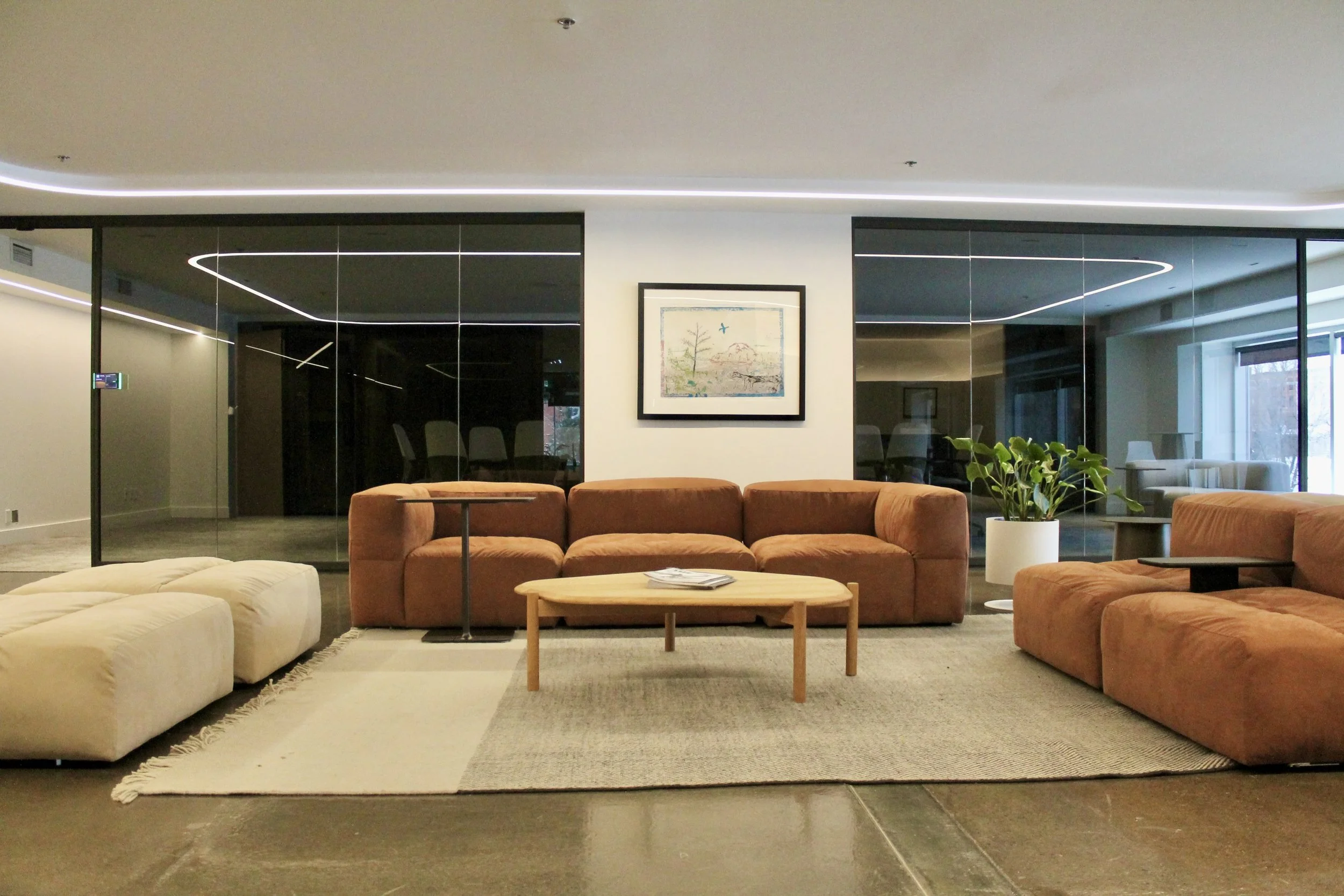
The contemporary workplace is more than a collection of workstations, meeting rooms, and shared amenities. It is a strategic environment that influences performance, culture, wellbeing, and the daily experience of the people who occupy it.
Corporate office design shapes how teams focus, collaborate, recover, communicate, and move through the workday. Every spatial decision carries consequence. Lighting affects concentration. Acoustics influence stress. Circulation affects efficiency. Materiality changes the emotional tone of the environment.
Lylko Studio designs corporate office interiors in Montreal through a human-centred and neuro-architectural lens. The result is a workplace that feels refined, operationally intelligent, and deeply aligned with the needs of the organization.
Exceptional workplaces create value through clarity, comfort, efficiency, and experience.
Spatial planning that supports concentration and reduces unnecessary distraction.
Environmental design choices that support comfort, calm, and daily workplace health.
Layouts that improve movement, operational rhythm, and intuitive navigation.
Workplace environments that express how an organization thinks, leads, and collaborates.
Design decisions that support productivity, retention, and long-term organizational value.
02
What Corporate Office Design Includes
Corporate office design is the strategic planning and development of workplace environments. It includes spatial programming, office layout planning, circulation strategy, lighting design, acoustic consideration, furniture direction, material selection, technical documentation, and construction coordination.
For companies in Montreal, this may involve designing a corporate headquarters in Downtown Montreal, a refined professional office in Westmount, a creative workplace in Griffintown, or a workplace renovation inside an existing commercial building with heritage character and technical constraints.
The process begins with understanding how the organization actually operates. How do teams interact? Where is privacy required? Where does collaboration happen? Which areas need calm? Which spaces support client trust? Which moments shape employee experience?
- Corporate office space planning
- Workplace strategy and programming
- Reception and client-facing area design
- Private office and open workspace planning
- Meeting room and collaboration zone design
- Quiet rooms, focus spaces, and wellness areas
- Lighting, acoustics, material, and furniture direction
- Technical drawing packages for construction coordination
Workplace Wellness
Designing Workplaces That Support Organizational Health
Workplace wellness begins with the lived experience of the environment. It is shaped by light, sound, proportion, air quality, ergonomics, materiality, privacy, and the ability to move through the space with ease.
A well-designed workplace can help reduce cognitive fatigue, support emotional comfort, encourage healthier movement, and create a stronger sense of belonging. These are not decorative considerations. They are part of how a modern organization supports its people.
Through neuro-architecture, Lylko Studio considers how the built environment influences the brain, body, and behaviour. This allows the workplace to become a more supportive, focused, and resilient setting for daily performance.
03
Why Workplace Wellness Matters Now
The evolution of hybrid work has fundamentally reshaped expectations of the modern office. The workplace must now provide meaningful value beyond what employees can access remotely.
Today’s office must support connection, concentration, mentorship, culture, collaboration, and client confidence. It must justify the commute through experience, function, and purpose.
In Montreal, organizations operate across a wide range of commercial environments, from downtown office towers to converted industrial spaces, boutique professional suites, and heritage commercial buildings. Each setting requires a tailored design response that respects the architecture while improving the way people work inside it.
Workplace Zones
Designing The Office Around The Complete Workday
The arrival experience establishes trust, tone, and spatial clarity. It should feel composed, welcoming, and aligned with the organization’s professional identity.
Individual work zones require acoustic comfort, visual order, ergonomic support, and enough privacy to sustain attention.
Meeting rooms, project rooms, and shared work areas should support dialogue without disrupting the wider workplace environment.
Leadership spaces should balance discretion, accessibility, authority, and comfort while supporting confidential work and focused decision-making.
Quiet rooms, restorative corners, and decompression zones help support mental clarity, emotional regulation, and long-term employee wellbeing.
Lounges, kitchen areas, and informal gathering spaces support culture when they are planned with comfort, acoustic separation, and movement in mind.
04
The Role Of Neuro-Architecture In Office Design
Neuro-architecture examines how physical environments influence human perception, stress, attention, memory, navigation, and behaviour. In workplace design, this perspective allows each spatial decision to be evaluated through both function and human experience.
Harsh lighting can increase fatigue. Poor acoustic planning can reduce concentration. Confusing circulation can create low-grade stress. Overexposed workstations can limit comfort. Sterile material palettes can make an organization feel colder than intended.
The reverse is equally important. Warm materiality can create ease. Natural textures can soften the environment. Clear zoning can reduce mental friction. Layered lighting can support different modes of work. Thoughtful thresholds can help people move from public to private settings with greater comfort.
This is the foundation of Lylko Studio’s philosophy: Concrete Empathy. Cold structures are transformed into warm, intelligent environments that understand the people within them.
Planning Framework
Corporate Office Wellness Checklist
A strategic checklist for organizations planning a new office, workplace renovation, or commercial interior project in Montreal.
Employee Experience
What should employees feel when they arrive, work, collaborate, recover, and leave the workplace?
Focus & Privacy
Where does concentrated work happen, and how is it protected from noise, visual clutter, and interruption?
Collaboration Flow
Are meeting rooms and shared zones positioned to support communication without creating congestion?
Lighting Quality
Does the workplace balance daylight, task lighting, ambient lighting, and visual comfort throughout the day?
Acoustic Comfort
Can people speak, focus, take calls, and collaborate without constant sound disruption?
Future Adaptability
Can the layout adapt as the organization grows, restructures, or evolves its hybrid work model?
05
Corporate Office Design In Montreal
Montreal offers a distinct architectural and commercial context. Corporate interiors may be located in modern towers, converted industrial buildings, historic properties, mixed-use developments, or boutique commercial spaces.
In Downtown Montreal, office design often requires a polished, efficient environment for professional teams, executives, and client-facing operations. In Griffintown, workplaces may call for greater flexibility, creative energy, and hospitality-inspired comfort. In Old Montreal, the design response may need to preserve character while introducing improved lighting, acoustics, and workplace functionality.
Strong office design respects the building’s existing architecture while shaping a more intentional interior experience. The result is a workplace that feels grounded in place, aligned with business objectives, and responsive to the people who use it every day.
Our Process
From Workplace Strategy To Built Environment
Discovery & Workplace Audit
We study the existing or proposed workplace, organizational structure, employee needs, brand positioning, operational flow, and spatial challenges.
Spatial Strategy
We develop zoning, circulation, workstation planning, meeting room strategy, reception flow, and wellness-focused spatial recommendations.
Design Development
We refine the material palette, lighting direction, furniture strategy, architectural details, and overall design language of the workplace.
Technical Documentation
We prepare the drawings and design information required for pricing, construction coordination, and accurate implementation.
Common Mistakes
What Weak Office Design Often Misses
Weak workplace design is rarely obvious at first glance. It shows up in quieter ways: distracted teams, underused meeting rooms, uncomfortable workstations, poor circulation, acoustic fatigue, and spaces that fail to reflect the quality of the organization.
Planning only for headcount, instead of understanding workflow, behaviour, privacy, and employee experience.
Underestimating acoustics, which can undermine concentration, privacy, and the overall quality of the workday.
Following trend-driven office concepts that appear impressive visually but fail to support the organization’s real needs.
Treating wellness as an amenity, instead of embedding comfort, light, recovery, movement, and calm into the workplace itself.
Business Impact
A High-Performing Workplace Is Felt Before It Is Measured
A well-designed office creates a sense of order. People understand where to go. Teams know where to gather. Focused work is protected. Client-facing spaces feel considered. The environment begins to support the organization quietly, consistently, and visibly.
For leadership teams, the physical workplace remains a powerful expression of culture, quality, and direction. It influences recruitment, retention, client perception, employee satisfaction, and the daily rhythm of the business.
Related Services
Build A More Complete Commercial Design Strategy
Corporate office design often connects with broader commercial interior strategy. These related services support workplace performance, human-centred design, and premium commercial environments.
FAQ
Corporate Office Design Questions
What is corporate office design?
Corporate office design is the planning and design of workplace environments to support business operations, employee wellbeing, client experience, and organizational culture. It includes layout planning, lighting, acoustics, materials, furniture direction, and technical design coordination.
How does office design affect workplace wellness?
Office design affects workplace wellness through light, sound, ergonomics, movement, privacy, visual calm, air quality considerations, and access to restorative spaces. These elements influence comfort, focus, stress, and daily performance.
What types of offices does Lylko Studio design?
Lylko Studio designs corporate offices, professional workplaces, boutique offices, executive suites, client-facing offices, team workspaces, and commercial workplace renovations in Montreal and surrounding areas.
When should a company hire an office interior designer?
Ideally, before signing a lease or beginning construction. Early design involvement helps determine whether the space can properly support headcount, workflow, privacy, meeting needs, employee wellbeing, and long-term growth.
What is workplace wellness in office design?
Workplace wellness in office design refers to the intentional use of spatial planning, lighting, acoustics, ergonomics, materials, biophilic elements, and restorative spaces to support employee health, comfort, and performance.
Does office design impact employee productivity?
Yes. A well-designed office can reduce distraction, improve circulation, support focus, create better meeting environments, improve comfort, and help employees work with greater clarity throughout the day.
Can Lylko Studio design an office renovation in Montreal?
Yes. Lylko Studio works on corporate office renovations, new workplace concepts, commercial interiors, and office space planning projects across Montreal.
Discuss Your Corporate Office Design Project
Whether you are planning a new office, a workplace renovation, or a corporate interior project in Montreal, Lylko Studio designs environments that support wellbeing, performance, and long-term organizational value.
Start The Conversation